The app you open first thing says a lot
Your eyes open. The room is still dark. And before you have made a single conscious decision, your hand is already moving across the bedside table, feeling for the phone.
You haven't said a word yet. You haven't remembered where you are, what day it is, or whether fajr has come in. But the screen is lit, and something is already pouring into you.
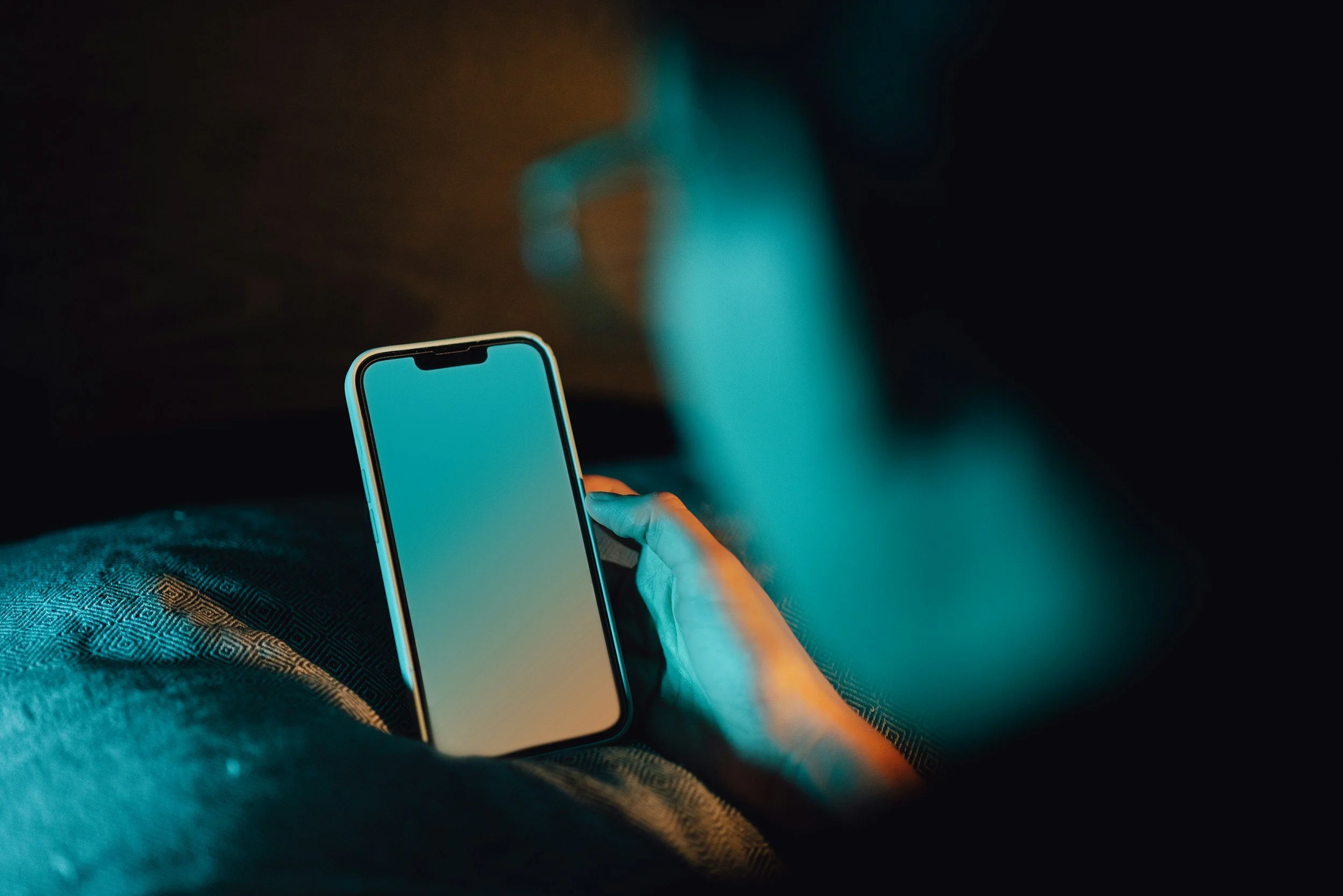
I want to talk about that moment. Not to shame anyone, because I have lived in that moment more mornings than I can count, but because I recently discovered how much it shapes everything that comes after it.
Why we reach so quickly
If you ask most of us why we pick up the phone first thing, we would say something practical: it's my alarm, I need to check the time, I'm just seeing if anyone messaged. All true. But underneath the practical reasons, a few quieter things are going on.
It's already in our hand. For most of us the phone is the alarm clock. We touch it to switch off the alarm, and once it's unlocked, the rest follows on autopilot.
Habit runs on cue and reward. Waking up is the cue, the scroll is the routine, and the small hit of something new is the reward. Repeat it a few hundred mornings and the hand moves before the mind does.
We want to know the world is still there. Hours of sleep feel like hours of being out of the loop. Checking is a way of catching up, of reassuring ourselves that nothing has gone wrong while we were gone.
We are afraid of being needed and not answering. Especially as mothers. A child, a family group, a friend in trouble. The phone feels like responsibility.
It's easier than the day. Sometimes, if I'm honest, the scroll is a way of not getting up yet. Another person's life is easier to look at than my own to-do list.
None of these are wicked. But all of them mean that the first voice in our heads each morning is someone else's.
A little nerdy science

Here is where it gets interesting. The waking brain is not the same brain you have at 11am. It comes online in stages, and the first stretch of the morning is unusually sensitive.
Sleep inertia. For roughly the first 15 to 30 minutes after waking, the brain is in a kind of in-between state. The prefrontal cortex, the part responsible for focus, judgement and self-control, is still warming up. In other words, whatever you meet first, you meet before your filters are fully up.
The cortisol rise. In the half hour or so after waking, cortisol naturally rises sharply. This is healthy; it's the body's way of getting us alert and ready. But pour a stressful news headline, a tense message or a work email on top of that natural surge, and alert can quickly tip into anxious, before you have even put your feet on the floor.
Slow waves to fast waves. As we wake, the brain shifts from slower, dreamier brainwave patterns into the faster ones of ordinary waking thought. You will often read that this makes the first minutes "highly suggestible." The science on that word is softer than the internet makes it sound, but the general idea holds: the mind is still settling, still soft, and what we press into it early tends to leave an impression.
Dopamine and novelty. Feeds and notifications are designed around unpredictable rewards: you never know what the next swipe will bring, which is exactly what keeps you swiping. Start the day there, and slower, deeper things like Quran, a real conversation or a page of focused work can feel flat by comparison.
Attention residue. When we switch from one thing to another, part of our attention stays behind on the first thing. Read one unsettling message at 5am and a piece of you is still chewing on it during salah.
Put all of that together and the picture is clear: the first input of the day isn't just one moment. It sets the tone for the hours that follow.
So what does your first app say?
This is not a diagnosis. It's a mirror. But it's worth noticing which app your thumb finds first, because it often tells you what your heart is reaching for. Here’s my theory:
WhatsApp: connection, and often responsibility. Who needs me? Did I miss something? Am I still needed?
Instagram: comparison and validation. How is everyone else doing? How am I being seen?
Email: obligation. What do I owe today, and to whom?
The news: a need for safety or control. What has gone wrong while I was asleep?
YouTube or TikTok: escape. I'm not ready for today yet.
Calendar or weather: planning. Am I prepared?
A Quran or adhkar app: remembrance. Who do I turn to first?
And then there is the option that isn't on the list: nothing at all. Just space.
Truthfully, my go-to was WhatsApp.
The video that changed my mornings
A while ago I came across brain coach Jim Kwik talking about exactly this. His advice was simple to the point of sounding almost too easy: don't touch your phone in the first hour after you wake up. His reasoning was that reaching for it first thing trains the brain to be distracted and reactive, and that a day which begins in reaction is very hard to steer.
That word stayed with me. Reactive. So much of my morning was a reaction to something someone else had sent, posted or reported.
So I decided to try it, and I pushed it further: two hours, no phone. For 2 hours, the phone stayed out of reach and the first part of my morning looked like this instead:
Prayer
Quran
Dhikr
A shower
Breakfast
That's it. Nothing clever. And honestly, the result surprised me.
The brain fog I had just accepted as part of being a busy mother wasn't there. I felt clearer, steadier and noticeably more focused, not just in the morning but well into the day. Things I had been putting off felt doable. I wasn't carrying other people's noise into my own work.
I want to be honest about one thing: there isn't a study that proves two hours is the magic number. Jim Kwik suggests at least an hour; two is simply what I tried. But everything above about how the waking brain works explains why giving it a quiet, intentional start makes such a difference. You don't need to take my word for it. Try it and watch what happens.

What the Prophet ﷺ reached for first
Here is the part that moved me most. When I looked at what I had replaced the phone with, prayer, Quran, dhikr, washing, I realised I hadn't invented a productivity hack. I had stumbled back into the sunnah.
The very first words the Prophet ﷺ taught us to say on waking are words of gratitude:
Alhamdulillahil-ladhi ahyana ba'da ma amatana wa ilayhin-nushur.
All praise is for Allah who gave us life after He caused us to die, and to Him is the return. (Bukhari)
Before the world gets a word in, the believer's first words are directed to Allah. Not a reaction. A turning.
And then there is this hadith, which reads almost like a description of brain fog. The Prophet ﷺ told us that while we sleep, shaytan ties three knots at the back of our head. When we wake and remember Allah, one knot comes undone. When we make wudu, the second comes undone. When we pray, the third comes undone, and we begin the morning energetic and in good spirits. Otherwise, we begin it sluggish and in a bad mood. (Bukhari)
Remembrance. Water. Prayer. Energy and good spirits on one side; heaviness and a low mood on the other. Fourteen centuries before anyone measured cortisol, we were given a morning routine that untangles the mind.
The Prophet ﷺ also made du'a for this ummah: "O Allah, bless my ummah in its early mornings." (Abu Dawud, Tirmidhi) The early morning is a blessed window. The question is simply who we give it to first.
If two hours feels impossible
I know. Some mornings start with a crying child, a school run or an urgent call. So start smaller. Any of these will make a difference:
Let the phone sleep elsewhere. Charge it outside the bedroom, or at least across the room. Distance breaks the autopilot.
Buy a simple alarm clock. It removes the main excuse for picking the phone up at all.
Keep something better within reach. A mushaf, a dhikr card or a small notebook on the bedside table where the phone used to be.
Make the waking du'a your first sentence. Even if everything else slips, let that be the first thing.
Pray fajr before you unlock the screen. If that's all you manage, it's already a different morning.
Then stretch it. Twenty minutes. Then an hour. Then see how far you want to go.
If you truly need the phone (a child away from home, a family emergency), set it so only key contacts can reach you, and leave everything else for later.
One question for tomorrow morning
Tomorrow, when your eyes open and your hand starts to move, pause for one breath and ask yourself:
Who do I want to hear from first?
Because the app you open before fajr does say a lot. But so does the one you leave closed.